
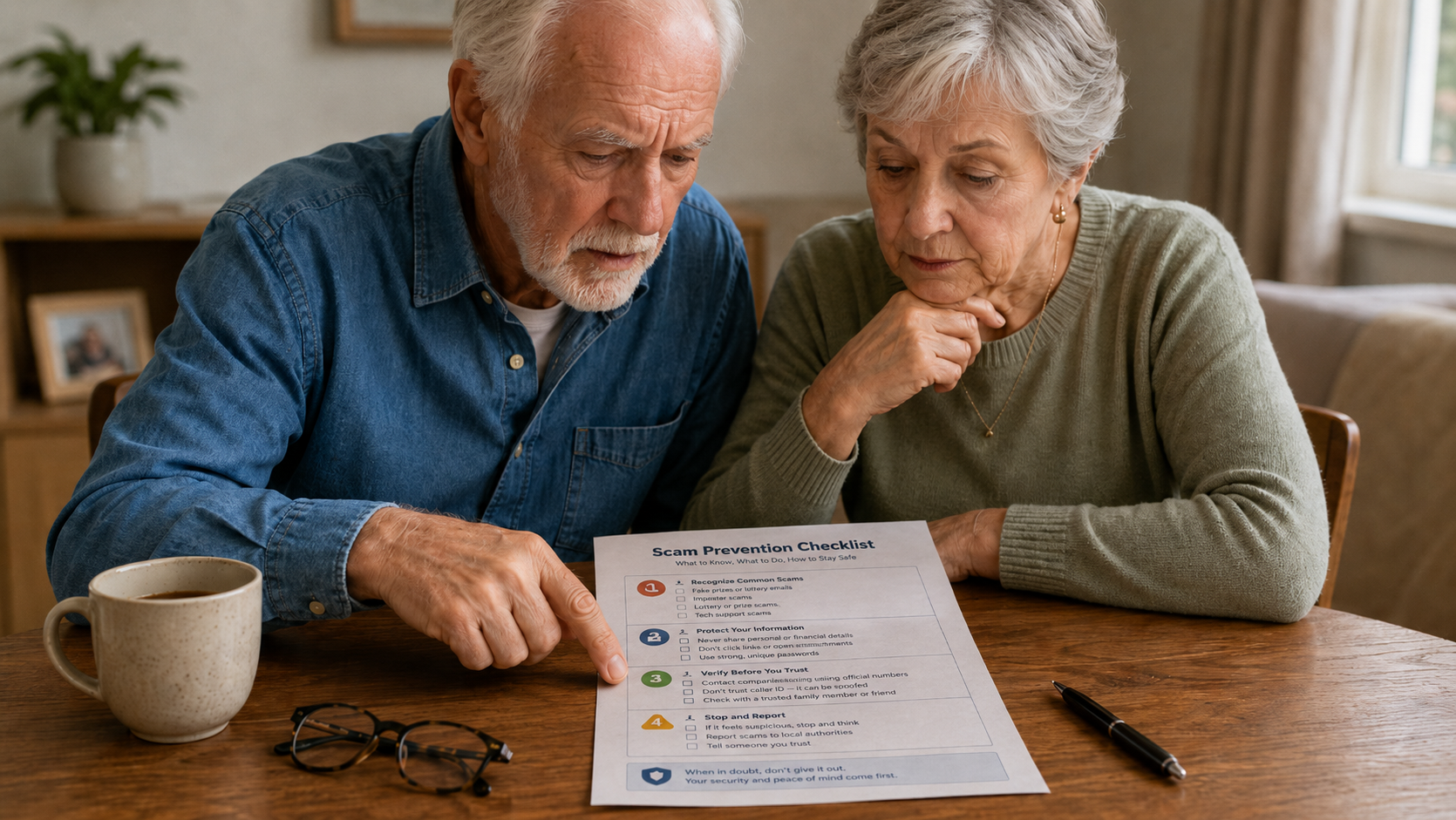
Scams targeting seniors are becoming more convincing, more personal, and harder to spot. Fraudsters often use fear, urgency, embarrassment, or trust to pressure people into acting quickly. A simple scam prevention checklist for seniors and families can reduce the risk of financial loss and help everyone respond calmly when something feels wrong.
The first rule is simple: pause before you pay, click, or share information. Many common scams targeting seniors begin with a phone call, text message, email, social media message, or pop-up warning. The scammer may claim to be from a bank, government agency, delivery company, tech support desk, or even a family member in trouble. These scams often include urgent demands for money, gift cards, cryptocurrency, wire transfers, or personal information.
Families should talk openly about fraud prevention for seniors before a crisis happens. Create a trusted contact list with phone numbers for family members, the bank, doctor’s office, local police non-emergency line, and the Canadian Anti-Fraud Centre. Keep this list beside the phone and saved in the senior’s mobile device.
A useful senior scam protection plan should include these basic steps:
- Before sending money, confirm the request with a trusted person.
- Never give banking details, passwords, SIN numbers, or credit card information to an unexpected caller.
- Do not click links in suspicious texts or emails.
- Hang up and call the organization back using a verified phone number.
- Be cautious of gift card scams, grandparent scams, romance scams, fake investment offers, and computer tech support scams.
- Set lower daily banking limits where appropriate.
- Review bank and credit card statements regularly.
- Use strong passwords and turn on two-factor authentication where possible.
- Talk about suspicious calls without blame or embarrassment.
One of the most important parts of online safety for seniors is making it easy to ask for help. Many victims stay quiet because they feel ashamed. Families should make it clear that scams are designed to fool people. Being targeted does not mean someone is careless or foolish.
If money has been sent, act quickly. Contact the bank or credit card company, report the incident, save messages or phone numbers, and document what happened. Fast action can sometimes reduce further damage.
The best protection is not fear. It is preparation. A calm family conversation, a written checklist, and a clear response plan can help seniors stay safer from fraud, phone scams, phishing emails, and elder financial abuse
Need a practical fraud prevention talk for your seniors’ residence, community group, or family?
FraudReady Canada provides clear, respectful, and practical presentations on common scams targeting seniors in Canada. Topics include phone scams, CRA scams, grandparent scams, romance scams, fake bank calls, phishing emails, and what families can do if a senior has already sent money.
Book a practical fraud prevention talk for your group today.