
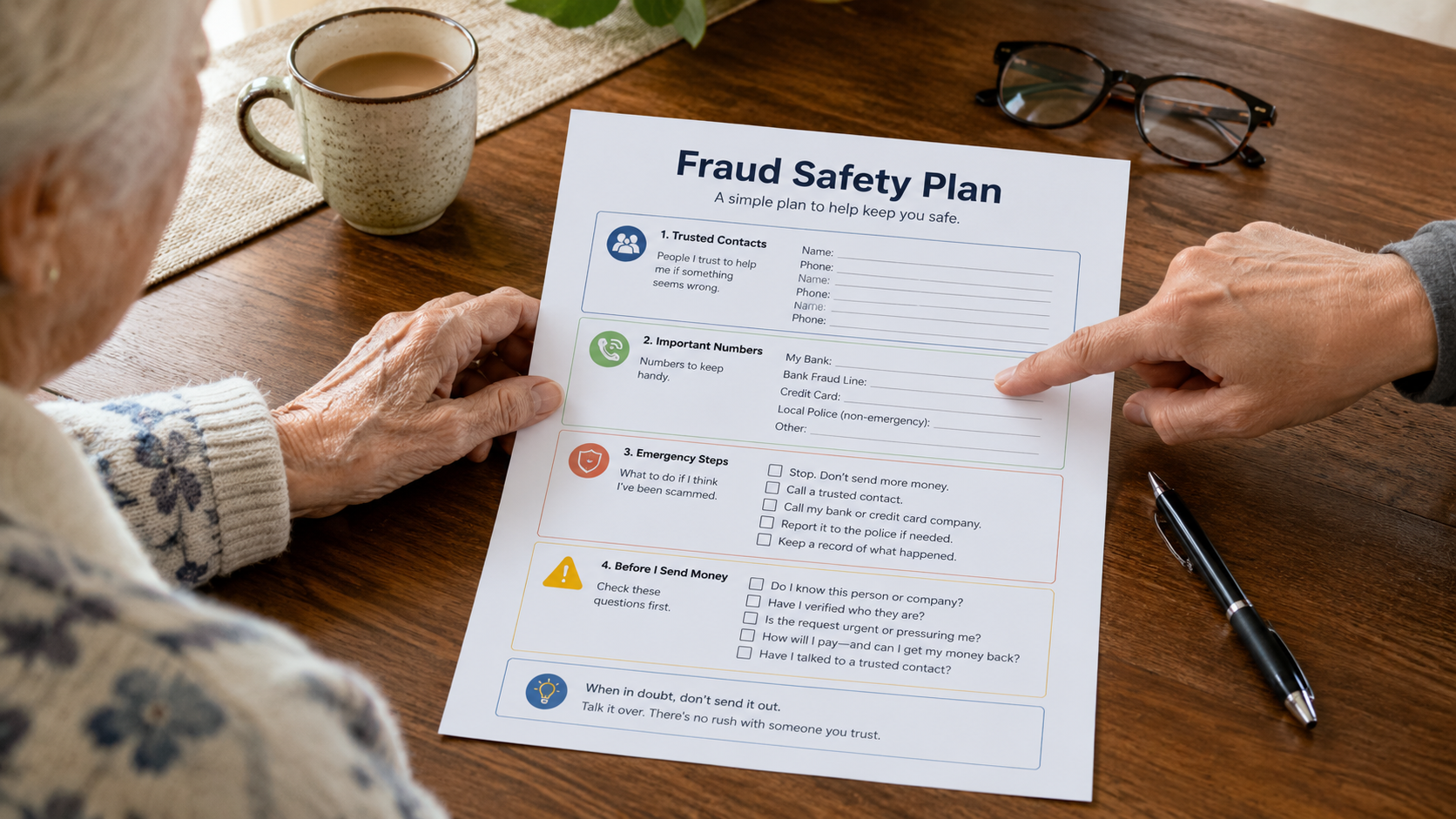
Fraud prevention works best before a crisis happens. Many families wait until an older parent has already received a suspicious phone call, clicked a fake link, or sent money to a scammer. A simple fraud safety plan can reduce panic, protect independence, and help everyone respond calmly.
A fraud safety plan for an older parent does not need to be complicated. It should be practical, respectful, and easy to follow.
Start with a calm conversation
Begin by explaining that scams can target anyone. Fraudsters use fear, urgency, romance, fake authority, and confusion to pressure people into acting quickly. The Canadian Anti-Fraud Centre reminds Canadians that fraudsters can target any person or business, so the discussion should not make your parent feel foolish or incapable.
Try saying: “Let’s make a plan so none of us has to make a rushed decision if something strange happens.”
Create a pause-and-verify rule
Every senior scam prevention plan should include one core rule:
Never send money, share banking information, or give personal details because of an unexpected call, text, email, or message.
Instead, your parent should pause and verify. If someone claims to be from the bank, CRA, police, a delivery company, or a family member in trouble, they should hang up and call a trusted number they already have.
This is especially important for emergency scams, sometimes called grandparent scams. The Canadian Anti-Fraud Centre says these scams prey on fear by claiming a loved one is hurt, arrested, or in trouble and needs money immediately.
Build a trusted contact list
Create a printed contact sheet and keep it near the phone. Include:
- Two or three trusted family members
- The bank’s official phone number
- Local police non-emergency number
- Credit card company numbers
- Doctor or care provider, if relevant
- Canadian Anti-Fraud Centre reporting number
For investment accounts, consider asking about a Trusted Contact Person. CIRO explains that naming a trusted contact can help an advisor respond if there are concerns about financial abuse or fraud.
Set banking safety habits
Families can help older parents reduce risk without taking over. Discuss daily transfer limits, account alerts, stronger passwords, and two-factor authentication. Consider whether a trusted family member should receive duplicate statements or help review unusual activity.
Be careful with joint accounts and powers of attorney. These can be useful, but they are serious legal and financial tools. The Government of Canada provides information for older Canadians about powers of attorney and joint bank accounts.
Review the plan regularly
Scams change. Review the plan every few months. Update phone numbers, discuss new scam examples, and remind your parent that asking for help is a strength, not a loss of independence.
A good fraud safety plan gives seniors confidence. It also gives families a clear process when something feels wrong.
Need a practical fraud prevention talk for your seniors’ residence, community group, or family?
FraudReady Canada provides clear, respectful, and practical presentations on common scams targeting seniors in Canada. Topics include phone scams, CRA scams, grandparent scams, romance scams, fake bank calls, phishing emails, and what families can do if a senior has already sent money.
Book a practical fraud prevention talk for your group today.